
Startup visa Germany guide: survive your first year
- December 8, 2025
- 1
Disclaimer This guide is for general information only and does not replace legal, tax or immigration advice. Rules can change and every case is different, so readers should

Disclaimer This guide is for general information only and does not replace legal, tax or immigration advice. Rules can change and every case is different, so readers should

Disclaimer This guide is for general information only and does not replace legal, tax or immigration advice. Rules can change and every case is different, so readers should always confirm details with official German authorities or a qualified professional before making decisions.
In the first twelve months, everything feels urgent. Banks, translations, appointments, forms, costs and momentum all compete for attention. That is why a clear startup visa Germany guide: survive your first year matters so much to founders who are packing their lives into two suitcases and a pitch deck.
This article is written in a friendly, plain English voice and it draws on real founder experience. Where helpful, the author shares short, clearly marked field notes so readers can compare decisions and avoid common traps.
Field note: Early on, the biggest fear was not competition. It was paperwork. There was uncertainty about which office to visit first or how long each step would take.
This guide focuses on the residence permit for entrepreneurs and the self-employed residence route, including practical preparation, documents and running a young venture during year one. It is not legal or tax advice.
Germany’s immigration rules are based on the Aufenthaltsgesetz. Founders should always double-check details on the Make it in Germany portal and the Visa Navigator tool. When in doubt, verify with the Bundesamt für Migration und Flüchtlinge or engage a qualified professional.
Many founders begin with a Schengen short-stay visa to explore. That is not a work authorization. For building a real operation, they need a longer horizon. In some cases an EU long-stay business permit applies, but most entrepreneurial cases focus on a Residence permit for self-employment.
This permit is commonly based on Aufenthaltserlaubnis nach §21 AufenthG. It can allow a founder to live and operate a venture in Germany if the business shows economic interest and feasibility. In simple terms, the authorities want to see that the business idea is useful and realistic.
Authorities look for clarity, impact and feasibility. Typical evidence follows founder visa requirements and reflects requirements for non-EU founders. This means a robust model, realistic financing and clear benefits to the local economy.
Within innovative business immigration, founders should articulate uniqueness, traction and a path to sustainable growth. Applications within a non-EU entrepreneur pathway are stronger when milestones are realistic and tied to real market demand. Some applicants may qualify under paths like the European Union Blue Card for highly qualified employment, but that route is focused on salaried work, not on running a business.
When comparing different residence routes for founders, it helps to weigh control, eligibility and speed:
Field note: The author prepared both an entrepreneurial plan and a backup employment option and then chose the track with fewer unknowns and clearer documentation.
Before booking a flight, founders should map out the steps to launch a company abroad. For digital products, a software startup relocation strategy can reduce overhead compared to a brick-and-mortar business setup. Cloud based infrastructure, remote friendly recruiting and modular compliance often give software companies more flexibility.
A clear tech founder relocation checklist helps prevent costly detours and missed documents.
Immigration reviewers look for startup business plan criteria that show feasibility and benefit. They care about the market, team, funding, risk and the local angle. Founders should describe their scalable business model requirements in plain language. That includes distribution, unit economics, gross margins and a path to repeatable sales.
The plan should also explain local job creation expectations. It is helpful to describe which roles will be hired in Germany and when. Reviewers also look for market validation expectations such as pilots, letters of intent and early revenue signals.
Many founders ask what counts as sufficient funding. There is no single number for all cases. Readiness depends on burn rate, runway and risk controls.
Any evidence of a minimum investment for founders should match the business model and cost structure. Examples include:
A strong narrative plus clean documentation makes feasibility easier to understand.
Authorities will expect a bundle of documents needed for business immigration. These typically include:
Some applicants use a blocked account for entrepreneurs to demonstrate liquid reserves. Founders also benefit from organizing evidence of evidence of customer interest such as pilot agreements and waiting lists.
Field note: One practical trick is to create a single master folder with numbered subfolders for identity, plan, traction, finance, insurance and correspondence. This makes updates fast and avoids confusion.
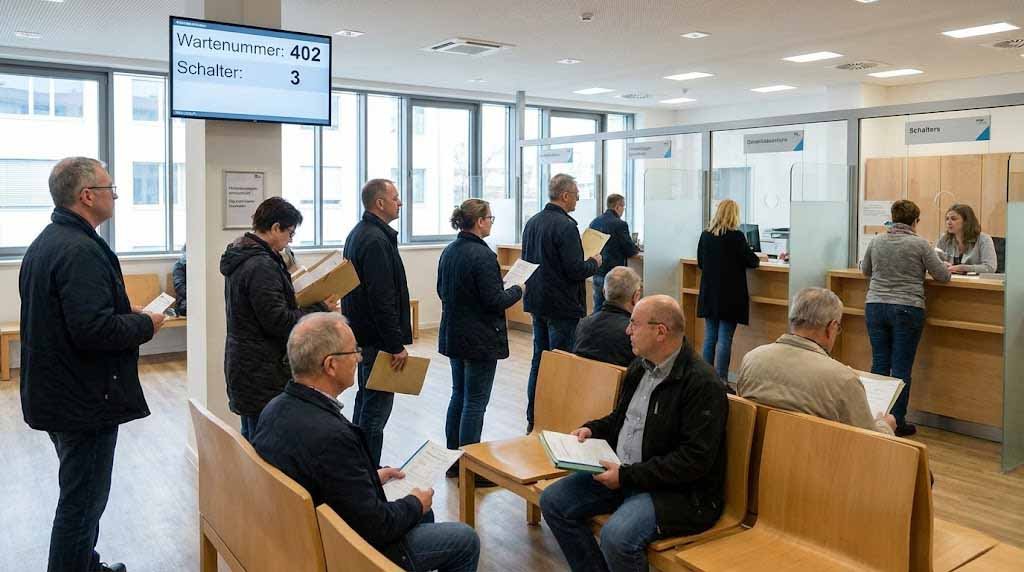
In many cities, founders can start by booking appointments with authorities online. It is wise to save confirmation emails and PDFs offline.
There is a difference between a standard municipal immigration office visit and an appointment at foreigner authority at the Ausländerbehörde, where residence permit decisions are made. Founders should bring translations where useful and a printed appointment confirmation.
For commercial activity, the trade office registration process runs through the Gewerbeamt. Company details and activity codes are recorded there. For corporate entities, registrations also appear in the Handelsregister and the German Trade Register.
Keeping stamped or digitally confirmed copies of registrations reduces stress when banks, investors or partners ask for proof.
Early chamber of commerce consultation with the Industrie- und Handelskammer can refine the plan and connect founders to mentors. For skilled trades, the Chamber of Crafts may provide additional guidance.
Berlin for example offers the Business Immigration Service Berlin, which coordinates several steps. Regional centers such as the Welcome Center for International Professionals offer support for international talent by providing orientation and referrals.
Differences in work style, queue systems and expectations can be a surprise. When navigating public offices in a new country, it helps to keep a one page case summary in German and English, including the purpose of the visit, a document index and contact details.
This style also helps with dealing with bureaucratic delays. When everything is logged, it is easier to follow up politely and demonstrate cooperation.
Choosing a legal form is both strategic and practical. In Germany, common options include:
A basic understanding of understanding liability company structures helps founders balance capital requirements and risk. Some people begin as freelancers, then later switch after choosing between freelancer and company setup once revenue is more stable.
Administrative momentum matters from day one. Founders should follow the tax number application steps promptly and learn how to register with the tax office at the Finanzamt.
Each person receives a Steueridentifikationsnummer for personal tax matters. Businesses also receive a tax number for VAT and income tax filings. Some founders use the Kleinunternehmerregelung if their revenue is still low, based on thresholds laid out in the German Commercial Code and tax law.
This is also the time to build a simple system for understanding local tax obligations such as filing frequencies and payment deadlines.
Banks evaluate industry, risk and compliance duties. For opening a business bank account as a foreigner, founders should prepare:
This is where small business bookkeeping basics start to matter. Consistent invoicing and structured records make bank checks smoother. They also make investor and customer due diligence easier.
Obligations depend on whether the founder is considered self employed, an employee of their own company or an employer of others. In broad strokes, social security registration can involve the Deutsche Rentenversicherung for pensions and the relevant Berufsgenossenschaft for accident insurance. Founders should document decisions and keep letters from authorities in one place.

Germany has a comprehensive and mandatory system. Founders must understand health insurance for migrants and the Krankenversicherungspflicht that applies to residents.
Depending on status and income, they may join a statutory fund or a private health insurance plan. They should build the cost into first year forecasts and follow the process for registering with health insurance funds well before their permit is decided.
Some cases require proof that funds are held securely. A blocked account for entrepreneurs is one tool to demonstrate financial stability. This can support proof of financial subsistence alongside bank statements, contracts and forecasts. Clear and honest documentation builds trust.
Two leverage points can accelerate progress:
Founders can also look at startup incubators that accept foreigners as a structured way to build a network and refine their concept. Well known programs include Start-up Accelerator Berlin, High-Tech Gründerfonds, EXIST Gründerstipendium and Berlin Startup Stipendium.
The timeline for getting residence approval varies by city, season and workload. Founders should plan with buffers in their business model and avoid promises to partners that depend on unrealistic processing times.
Keeping a dated log of submissions, replies and visits makes follow up easier and shows that the founder is acting in good faith when there are delays.
A meeting with the authority is often similar to a customer conversation. Effective founder interview preparation includes:
Typical questions asked in immigration interviews focus on the business model, customer segments, monetization and risk management. Authorities may also ask about startup milestones first year to see if the founder has a realistic roadmap.
There are several recurring common mistakes in founder applications. Examples include:
Founders can avoid these mistakes by providing self contained PDFs, clear summaries and consistent data. It is important to reference attachments inside the main document so reviewers can find each item quickly.
There are real risks of visa rejection for entrepreneurs, but there are also ways to reduce them. Founders help their case when they:
When a question from the authority is unclear, clarifying it politely is better than guessing.
A practical plan for the startup milestones first year might include:
Founders should adapt this roadmap to their own model. A software startup relocation strategy might emphasize product velocity, while a brick-and-mortar business setup might focus on location, permits and foot traffic.
When hiring your first employee abroad in Germany, founders need to align contracts with local law and payroll rules. They will usually register with a Berufsgenossenschaft, confirm social contributions with the Deutsche Rentenversicherung and monitor all social charges. A small internal checklist for onboarding makes the process repeatable.
With weekly habits, compliance with local regulations is manageable. Founders can set these small business bookkeeping basics:
These routines protect cash, save time during audits and support investor readiness.
Public and private funding can bridge time to revenue. An overview of grants and subsidies for new businesses helps founders decide where to invest time. Some programs, such as High-Tech Gründerfonds and other regional initiatives, combine capital with coaching and visibility. These tools often complement an accelerator-backed founder pathway.
Effective cultural adaptation for newcomers touches everything from hiring to sales. German partners usually value punctuality, clarity and reliability. Asking questions is seen as responsible rather than as a weakness.
A simple system for local networking for founders might be two events per month and two coffees per week. Some coworking spaces for migrants act as soft landings, with community managers who connect international founders to local service providers, designers and engineers.
Founders should treat memberships like tools. Each coworking membership or program should map to the tech founder relocation checklist and to a specific milestone, such as customer discovery, hiring or fundraising.
By month ten, it is wise to start preparing for the renewal of residence permit. Authorities will often look at revenue, customer traction and job creation. Founders should study the renewal criteria after the first year and align their documentation accordingly.
Markets change, so pivoting your business model may be necessary. The key is to keep the economic interest of the region clear. When a pivot is significant, it may be helpful to discuss it with a trusted adviser or a mentorship program for migrant founders and then present it clearly in renewal documents.
Some founders move alone and rely on solo founder immigration options. Others bring partners and design a co-founder shareholding structure that defines roles, vesting and decision making. Clear agreements make communication with authorities and investors easier.
Specialists are especially useful at inflection points, such as fundraising, pivots or geographic expansion. That is often when to consult an immigration lawyer. A tax adviser can help align operations with the German Commercial Code, VAT obligations and the Kleinunternehmerregelung where applicable.
Applicants need to meet founder visa requirements that reflect requirements for non-EU founders. A strong non-EU entrepreneur pathway case shows economic benefit, feasibility and a clear business concept.
The timeline for getting residence approval depends on city and workload. Founders should plan for a waiting period and keep records to handle dealing with bureaucratic delays.
To address how to prove your startup is innovative, founders can explain their innovative business immigration story, show market validation expectations through pilots and contracts and supply evidence of customer interest.
Common documents needed for business immigration include identification, business plan, contracts, bank statements and proof of financial subsistence. In some cases a blocked account for entrepreneurs is added, along with detailed startup business plan criteria.
They follow the trade office registration process with the Gewerbeamt, register in the Handelsregister if needed, learn how to register with the tax office at the Finanzamt, obtain a Steueridentifikationsnummer and complete the tax number application steps.
There is no single right choice. Founders should review understanding liability company structures and then decide by choosing between freelancer and company setup, for example Gesellschaft mit beschränkter Haftung, Unternehmergesellschaft haftungsbeschränkt or Einzelunternehmen.
Yes. They must comply with health insurance for migrants and Krankenversicherungspflicht, follow registering with health insurance funds and ensure proper social security registration with institutions like the Deutsche Rentenversicherung.
They can search for startup incubators that accept foreigners, public grants and subsidies for new businesses and mentorship programs for migrant founders. Options include Start-up Accelerator Berlin, High-Tech Gründerfonds, EXIST Gründerstipendium, Berlin Startup Stipendium, the Business Immigration Service Berlin and the Welcome Center for International Professionals.
Founders attend an appointment at foreigner authority at the Ausländerbehörde. There they answer questions asked in immigration interviews. Focused founder interview preparation and awareness of common mistakes in founder applications are helpful.
They should gather proof of traction that matches the renewal criteria after the first year, prepare for renewal of residence permit ahead of time and consider any pivoting your business model in light of economic interest and job creation.
A well organized first year connects the non-EU entrepreneur pathway with the self-employed residence route and consistent execution. Policy details should always be confirmed with the Bundesamt für Migration und Flüchtlinge, the Make it in Germany portal and the Visa Navigator tool.
Field note: Community often matters as much as capital. Each introduction can save days of research and uncertainty.
Practical moves include steady documentation, proactive calendars, local networking for founders, selective use of coworking spaces for migrants, ongoing cultural adaptation for newcomers and respect for German business etiquette for meetings. Over time, the system tends to reward clarity, patience and follow through.
Written by Arvid Jensen, an international founder who has helped build and relocate startups across Europe. Published by Ahmed Saeed, who focuses on making complex immigration and business topics easy to understand for new entrepreneurs.