

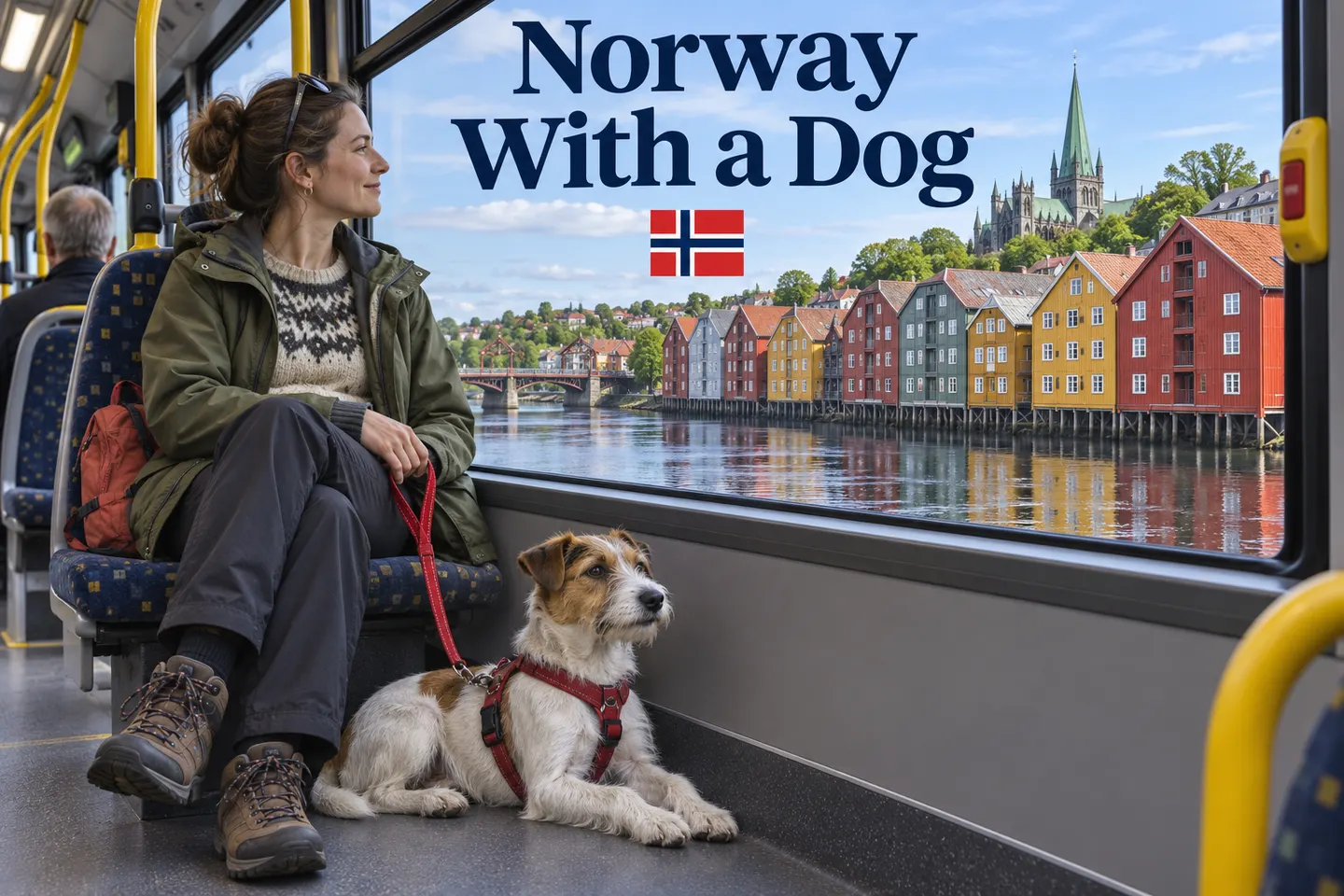
Norway With a Dog: Taking Buses, Trams and Boats in Trondheim
- November 13, 2026
- 0
A dog can travel free on AtB buses, trams and boats in the Trondheim region of Norway. What changes when you reach the water is where the dog

A dog can travel free on AtB buses, trams and boats in the Trondheim region of Norway. What changes when you reach the water is where the dog
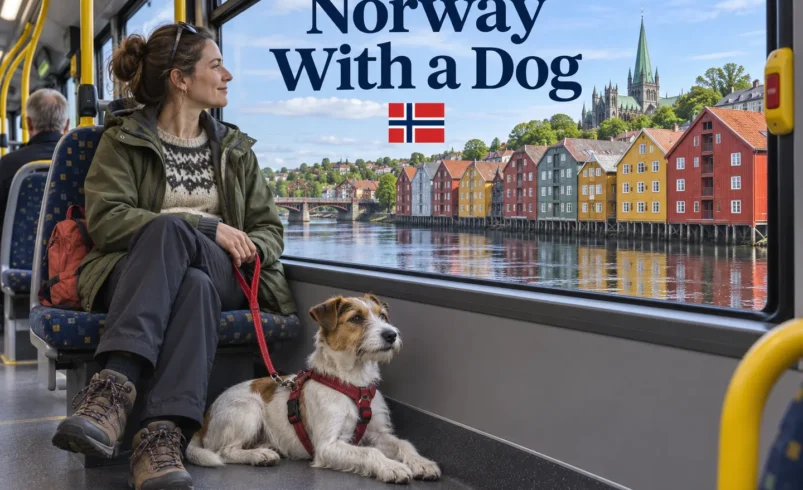
A dog can travel free on AtB buses, trams and boats in the Trondheim region of Norway. What changes when you reach the water is where the dog can ride. On a bus or tram, your leashed dog can sit on the floor or on your lap. On an AtB boat, the ordinary pet rule requires a cage in the area indicated by the crew. If your day out involves both a bus and a boat, plan for the crossing before you leave your accommodation.
AtB lists the dog fare as free for these services. You still need the right ticket for yourself. When comparing two ways to get somewhere, separate three questions: who operates each leg, which ticket you need as a passenger, and whether you have the equipment to bring your dog. An itinerary can be affordable but impractical if it includes a crossing and your carrier is back at the hotel. AtB’s English guide to travelling on board
Look for the operator name as well as the place name. A departure from Trondheim might be a local bus, a long-distance coach or a train. A pet policy you read on a local transport website applies to the services described there. Before booking a connection with another operator, open that company’s animal policy and check the exact service. For instance, SJ Norge publishes its own information about animals on trains, including where they can travel and when a ticket is required. SJ Norge’s guide to travel with animals
Choose a place where your dog can settle without blocking the aisle. A small dog can ride on your lap. A larger one may be more comfortable on the floor by your feet. AtB requires the dog to be on a leash and keeps passenger seats clear of animals. Putting a blanket on a spare seat does not turn it into an approved place for a pet. AtB’s Norwegian boarding guidance
Consider the space the dog occupies when lying down. A terrier may fit between your feet, while a long-legged dog can put its hindquarters well into the aisle even when its head is close to you. Before you settle, look towards the doors and check that a passenger could walk past without stepping over a paw, tail or leash. Keep your bag on your side of that same boundary.
When the doors open, give people leaving the vehicle space to pass. If a family is trying to get a pushchair through, gather the leash on your side and move together if needed. The practical goal is for other passengers to be able to board and leave normally. On a busy service, the easiest place at the beginning of the ride may stop working a few stops later.
AtB directs ordinary pets on boats to travel in a cage placed where the crew instructs. The company explains that this arrangement keeps animals away from seats and carpets in the passenger lounge, including for people with allergies. A dog that was allowed on your lap during the bus ride still needs the boat arrangement. Ask the crew where to put the cage when boarding instead of choosing a space beside an empty passenger seat.
If your dog has never used the carrier you plan to take, test whether you can manage the loaded carrier and the rest of your luggage before setting off. Think about the complete transfer. Can you carry it from the bus stop, manage your ticket and keep a hand available when boarding? If travelling with another adult, agree in advance who handles the luggage and who follows the crew’s instructions with the dog.
For a large dog, the practical question is often the cage itself. AtB’s published rule establishes the requirement but does not settle every question about a particular vessel or carrier. Contact the operator with your route, sailing time, dog size and carrier dimensions before committing to a trip you cannot easily change. Do not count on finding a suitable cage waiting at the terminal.
AtB describes specific exceptions to its boat cage rule for guide dogs accompanying blind or visually impaired passengers, verifiable service dogs and police dogs accompanying a paying uniformed officer. If one of these provisions applies, check the current wording with AtB when arranging your crossing. For an ordinary companion animal, plan around the standard cage requirement.
For an afternoon using an AtB bus into Trondheim and a tram later in the day, the dog’s arrangements are broadly consistent. Take the leash, plan where the dog can sit and keep the aisle clear on both vehicles. If your group splits up, make sure the person travelling with the dog has their own passenger ticket and knows the stop where you will meet again.
For a bus followed by an AtB boat, write the crossing first in your notes. Record the operator, departure time and carrier arrangement. Then choose the bus that gets you to the landing with enough time to find the boarding point and speak to the crew. A short transfer that works when carrying a backpack can be a poor choice with a dog, carrier and weekend luggage.
Check the return journey separately. If someone offers to pick you up by car and the plan changes, the replacement public transport route may include a different operator or a boat. Saving the outward timetable alone tells you little about what you and the dog can board on the way back.
Hund means dog, bånd means leash, bur means cage and båt means boat. The heading Om bord takes you to the operator’s on-board information. If you have a practical question about the cage, “Hvor skal jeg sette buret?” asks where to put it. For the journey home, “Gjelder dette også på returen?” asks whether the same arrangement applies on the return.
Before leaving, check that you can answer one question for each leg: where will my dog actually be during this ride? On a bus that might be on the floor at your feet. On the boat it means having the cage with you and following the crew to the designated area. That small check catches the most consequential difference between the two services while you still have time to change your plan.
Ahmad Hassan writes practical European guides for Bravlo. For this Trondheim guide, he compared AtB’s English and Norwegian passenger guidance to explain how a dog owner’s preparations change between a bus, a tram and a boat.