


Pink Soup in Lithuania: How to Order and Eat Šaltibarščiai
- November 12, 2026
- 0
When you order pink soup in Lithuania, the bowl is supposed to be cold. The little plate of potatoes alongside it is supposed to be hot. Try a

When you order pink soup in Lithuania, the bowl is supposed to be cold. The little plate of potatoes alongside it is supposed to be hot. Try a

When you order pink soup in Lithuania, the bowl is supposed to be cold. The little plate of potatoes alongside it is supposed to be hot. Try a spoonful of soup first, break off a piece of potato, then take another spoonful. That sequence gives you the tang of the kefir, the sweetness of the beetroot and the warmth of the potato while each is still at its best.
The name to look for on a menu is šaltibarščiai. If you have seen a photograph and wondered whether the pink comes from cream, tomatoes or berries, the answer is beetroot stirred into a pale cultured dairy base. Expect a savoury dish. The green flecks are likely to be dill, spring onion or cucumber. What you get on the spoon matters just as much as the colour.
Think of the tang of plain kefir with the gentle sweetness of cooked beetroot. Then imagine biting into cool cucumber while a little fresh dill brushes your tongue. A spoonful taken from the surface may taste mostly of dairy and herbs. Dip a little deeper and you can catch the grated or chopped vegetables that give the bowl its substance. A gentle stir makes it easier to taste them together.
If cold soup is new to you, try it before adding salt or breaking up the egg. The first mouthful tells you which part you want more of. Somebody who likes a sharp dressing might enjoy the tangy liquid most. Somebody who prefers texture may want a spoonful with cucumber and beetroot in it. A piece of potato between the two makes a useful pause, much as a bite of bread would in another meal.
Colour is a poor guide to flavour. Two bowls can be equally pink, yet one may be thick enough to mound on the spoon and the other easy to sip. Beetroot colours the dairy readily. Its colour tells you little about how much cucumber is in the bowl, how the beetroot was prepared, or whether the cook added a little vinegar. If you dislike particularly sharp foods, ask about the seasoning when you order.
A hot potato and a cold spoonful have different jobs. The potato offers a soft, fairly neutral bite. The soup brings sharpness, crunch and fresh herbs. Served separately, the potato stays warm longer than it would in a bowl of chilled kefir. You can choose when the two meet. That choice is especially welcome if you tend to eat slowly.
For the strongest contrast, leave the potatoes on their plate. Cut one into bite-sized pieces with your fork and alternate with the soup. If you are curious about the combination in a single mouthful, bring one small piece to the edge of the bowl and try it with a little soup. You will know whether you like it before committing the entire side dish. Whatever your preference, there is little advantage in tipping the whole plate into the bowl at the outset.
A side plate may carry plain boiled potatoes, potatoes tossed with butter, or a version chosen by that kitchen. If you particularly want the boiled-potato pairing, ask what comes with the soup. When a menu photograph shows potatoes but the written description lists only soup, check whether the side is included. A photograph can show how a dish is served without telling you exactly what the price covers.
On a Lithuanian menu, sriuba means soup. Burokėliai are beets, agurkai are cucumbers and krapai is dill. Kefyras is kefir. You might recognise all of these in a supermarket and still hesitate over the long word on a café menu. Save šaltibarščiai on your phone with the accents intact. Showing the name is perfectly practical when a menu has several beetroot dishes.
“Ar turite šaltibarščių?” means “Do you have pink soup?” You may notice the ending changes slightly from the dish name on the menu. You have the right dish. If potatoes matter to your order, “Ar bulvės įskaičiuotos?” asks whether the potatoes are included. Pointing to the menu entry while asking helps distinguish a side included with this bowl from a separate potato dish elsewhere on the page.
The egg deserves its own question. A neat half on top is easy to see. Chopped egg mixed into the soup is much less obvious. If you avoid eggs, ask “Ar sriuboje yra kiaušinių?” meaning “Are there eggs in the soup?” Asking for the topping to be left off may not answer that question. Likewise, the dairy in the base matters even if the surface looks like a simple beetroot purée.
For a first taste shared between two people, ask about the portion and whether the restaurant can bring an extra spoon. Taste the liquid and the vegetables before dividing the potato. A mouthful of bright pink liquid on its own gives you a different impression from a portion with cucumber, herbs and the side. If there is a single egg half on top, share it separately so both people can try the soup with and without it.
If this will be lunch, ask about the serving size before ordering another potato-based dish as well. A substantial bowl with a generous side may suit you on its own. A small cup served as the first course of a lunch menu may leave room for something else. The word for the dish tells you what kind of soup to expect. It cannot tell you how much a kitchen serves.
In November, a summer photograph can be a particularly unreliable way to choose a lunch stop. Šaltibarščiai is closely associated with warm weather. Look at the restaurant’s current menu or ask about today’s soup before making a special trip. An old review praising a bowl tells you somebody ate it there. It does not tell you what the kitchen has prepared today. The same caution applies if you spot the dish on a festival menu when planning a visit at another time.
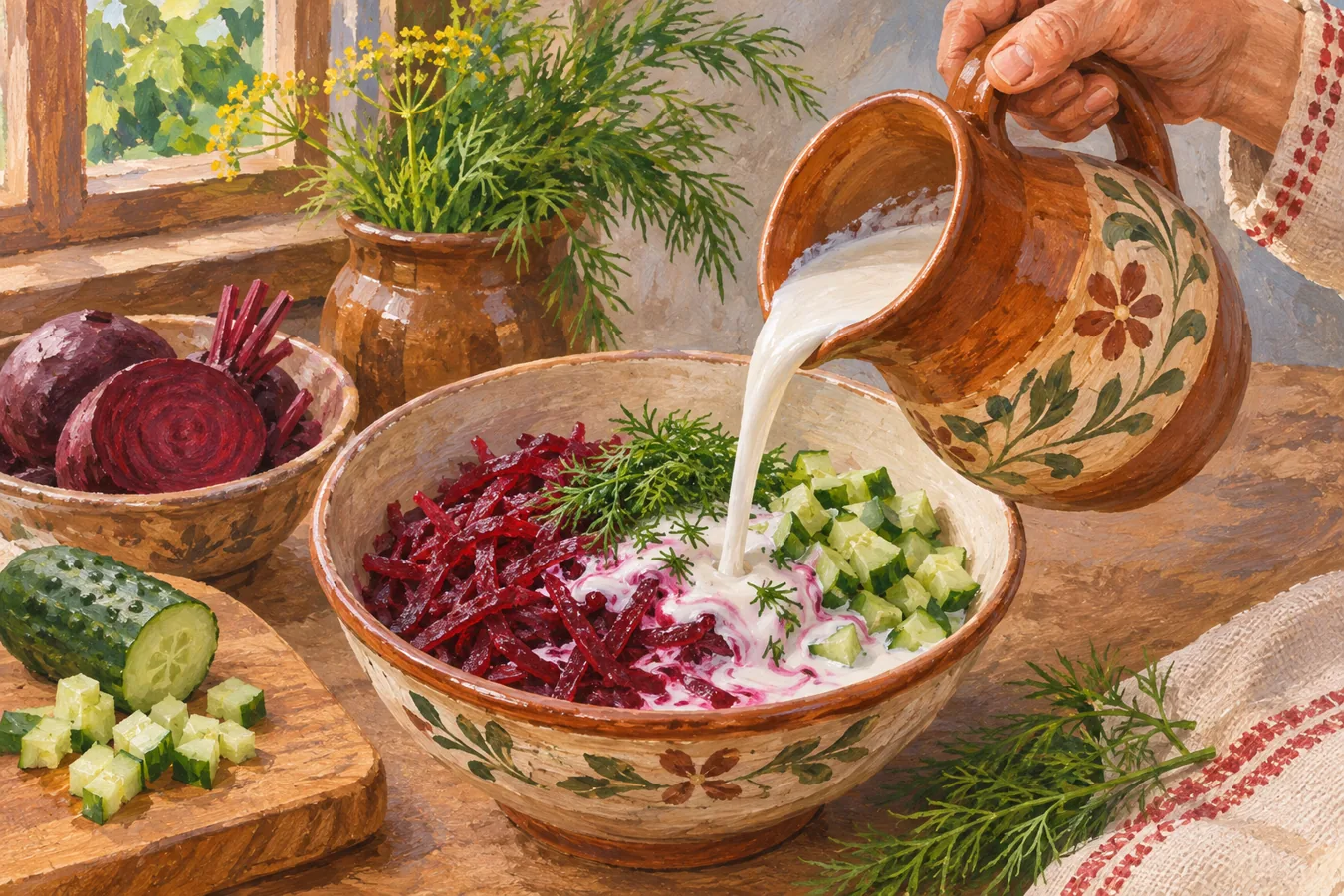
Cooked, cooled beetroot brings both the colour and the sweet, earthy flavour. Grating it makes thin strands that catch on a spoon. Chopping it gives more distinct bites. Cucumber adds a different crunch, and finely cut herbs distribute their flavour without leaving a whole sprig in every mouthful. The kefir draws these ingredients together. You can see the pink deepen as the beetroot is stirred through.
For a measured starting point, the Go Vilnius pink soup recipe gives quantities and a full preparation sequence, including the potatoes. Its treatment of the egg is especially helpful for understanding what arrives at a café. Some egg is chopped into the soup and some is reserved for the finish. The topping shows you only part of the recipe.
If you make the dish at home, time the two parts of the meal separately. Prepare the beetroot mixture early enough for it to chill. Cook the potatoes closer to serving, while the bowl is still in the fridge. In a small kitchen this order has another advantage. The grater, cutting board and mixing bowl can be washed up before the hot potatoes need draining. Put out both bowls and side plates before bringing either component to the table.
Start with the beetroot. If you buy it already cooked, read the ingredient list to see whether it is plain or pickled. Plain cooked beetroot lets you judge the sourness of the dairy first. Pickled beetroot brings seasoning of its own. Taste the mixture before adding vinegar. It is much easier to add a little acidity to a spoonful than to soften an entire bowl that has become too sharp.
For the dairy, look for plain kefyras. Save a little in the jug while you mix so you can adjust the texture. If your first spoonful is mostly liquid, give the bottom of the bowl a gentle turn before deciding it needs more vegetables. If the spoon stands in a dense pile of grated beetroot, add a little more kefir and taste again. These small adjustments are easier to repeat than a large splash added in a hurry.
At the potato display, think about how you plan to eat the side. A potato that holds its shape when boiled is easy to cut and lift with a fork. Similar-sized pieces cook more evenly, which is useful when the cold soup is ready and you want to serve everyone together. A few sprigs of fresh dill can dress both dishes. Keep some back when seasoning the soup if you want a little over the potatoes too.
Suppose one diner loves dill, a second likes a thicker bowl and a third wants to try the soup without the egg. There is no need to make three entirely separate batches. Before mixing in the egg, set aside an appropriate portion if the request is a taste preference. Reserve extra dill, chopped cucumber and some kefir. People can then add herbs, increase the crunch or loosen their own portions at the table.
For a guest with an allergy, ask about their needs before preparing or ordering the food. A garnish removed at the table cannot undo an ingredient already mixed into the base. If a restaurant describes a version as plant-based, ask what replaces the dairy and whether the potatoes have been tossed in butter. Those are two separate questions because the bowl and side may be prepared independently.
Serve a small first portion if you are introducing the dish to somebody who usually prefers hot soup. Keep the remaining soup chilled until it is wanted. LRT’s interview with a Kaunas University of Technology food scientist explains the role of the cultured dairy and the importance of refrigeration. Bringing out a second helping later also gives you a chance to stir the vegetables through again.
Look for the name šaltibarščiai if you want the chilled pink dish. A translation that says only “beet soup” leaves room for a different preparation. Ask whether it is served cold and made with kefir. Those two details tell you more than the colour of a picture or the fact that beetroot appears in the dish name.
Go Vilnius gives kefir or buttermilk as options. If you are comparing two recipes, first check the base and whether the beetroot is pickled. Changing both at once makes it difficult to tell why one bowl tastes sharper. For a second batch, keep one of those ingredients the same and change the other. Write down which version you preferred while the flavour is fresh in your mind.
An ordinary soup spoon and a fork for the potatoes work well. Start with a little of each component separately if you want to taste the difference in texture and temperature. Then decide how you prefer them together. If your potato rolls away each time you try to lift it whole, break it on the side plate first. The fork does the work and the soup stays in its bowl.
Look for a chilled beetroot and kefir soup with cucumber and herbs, and ask about the potato accompaniment. Keeping the Lithuanian name beside an English description on your phone is easier than memorising every ingredient. For another example of how local food names affect an order, Bravlo’s guide to ordering a baguette in France explains what to ask at the counter when different loaves look similar.
Ahmad Hassan is the editor of Bravlo, where he writes about European food and everyday life. For this guide, he drew on Lithuanian sources to explain how to order šaltibarščiai and why warm potatoes are served alongside the cold soup.