


Bottle Returns in Finland
- November 13, 2026
- 0
The first thing to do with an empty drinks can in Finland is also the easiest to forget. Leave it round. That small decision at the kitchen counter

The first thing to do with an empty drinks can in Finland is also the easiest to forget. Leave it round. That small decision at the kitchen counter
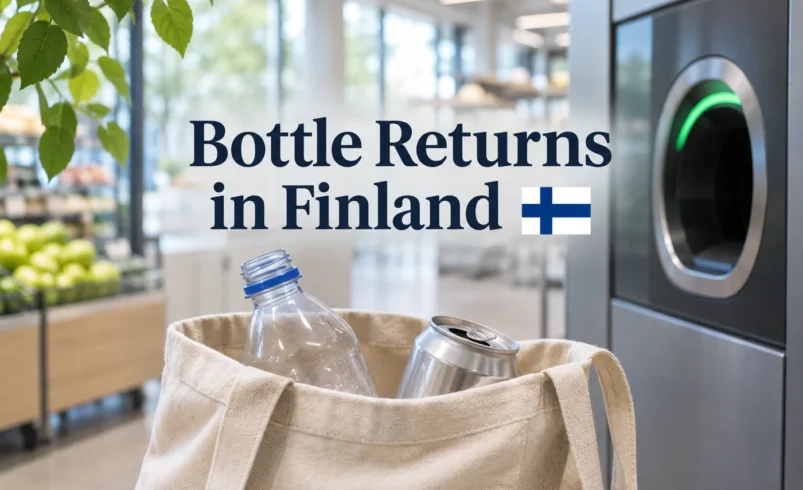
The first thing to do with an empty drinks can in Finland is also the easiest to forget. Leave it round. That small decision at the kitchen counter matters when you take it to the supermarket. A return machine needs to recognise what you put in, and a flattened can can cost you the deposit you paid for it.
Bottle returns in Finland work in two steps. Take eligible empty bottles and cans to a return point, then redeem the slip at the checkout where you made the return. The Finnish word for the deposit is pantti. If you are standing beside a machine holding a paper slip and wondering whether you have to buy something, the answer is no. Here is how to get from the label on your drink to the money back in your hand.
Pick up an empty Finnish drinks can and turn it slowly. Look for an oval deposit mark with a value inside it. On a plastic drinks bottle, look on the label before peeling anything off. The barcode helps identify the particular product, while the deposit mark tells you what to expect back. Both are worth protecting. A generic recycling triangle by itself tells you about the material, but gives you no deposit amount.
Glass takes a little more detective work. A glass drinks bottle can carry a Finnish deposit even if you cannot see the familiar oval. If you still have the shopping receipt, check the entry for the drink. If you are standing in the shop, look at the shelf label. At home you can enter the barcode number using the deposit checker linked from Palpa’s guide to returnable packaging. This is especially handy when two bottles of nearly identical shape have different labels.
Think of the deposit as money travelling with a particular container. If a guest leaves an eligible bottle in your kitchen, you can return it with yours. You do not need to work out who bought the drink or which friend has the original receipt. The receipt is useful evidence when you are unsure about a mark, so keep it if there is a bottle you want to ask staff about.
For packaging in Palpa’s system, an aluminium drinks can carries a 15-cent deposit. A recyclable PET drinks bottle carries 10, 20 or 40 cents depending on its size. Recyclable deposit glass carries 10 cents. Refillable glass has a separate return system. When working out the value of a mixed bag, read the amount on each marked container. Four plastic bottles need not have four identical deposits.
Here is a small kitchen-counter example. Two eligible cans come to 30 cents. Add a PET bottle marked 20 cents and one recyclable glass bottle with a confirmed 10-cent deposit. You should see 60 cents for those four items. If the machine shows 50 cents after three items, you know exactly which bottle you still need to check. There is little point counting a whole sack, but doing the arithmetic once makes the screen much easier to follow.
A picnic bag can give you quite a different total. Three cans and a bottle marked 40 cents add up to 85 cents, even if a fourth piece of packaging is riding home with them. A jam jar has no place in that calculation. Keep it for the appropriate glass collection route. Sorting on the table while the marks are visible saves you having to empty the whole bag in a narrow shop entrance.
Yes, if the bottle or can belongs to Palpa’s return system, you can use a retail return machine in Finland even if you bought the drink elsewhere. This makes a difference on a trip. You can buy a bottle near a station, finish it on the way to your accommodation and return it while buying breakfast the next day. Retracing the route to the first checkout is unnecessary.
There are two qualifications worth remembering. A retailer can have packaging in a separate return system, so check the retailer’s instructions for a bottle carrying its own return marking. And if you walk into a small shop without a machine, the types of containers it sells matter. A seller taking part in a particular system accepts eligible empties of that type. A kiosk with a counter and a supermarket with a bank of machines can both be return points, although the experience inside is quite different.
For a few lunch bottles, the nearest participating shop is a reasonable choice. For the leftovers from a birthday party or a weekend at a cottage, think about the person receiving them. A staffed kiosk with a short queue and very little storage is a poor first stop for several big bags. Pick a larger return point, or ask the shop how best to bring the empties in. Keep glass in a sturdy bag you can set down without the bottles knocking into one another.
Look for pullonpalautus, the sign for bottle returns. Put your bag somewhere you can reach without blocking the entrance. Empty any remaining drink before you start. Leave each label attached and each container in its original shape. Palpa advises returning empty PET bottles with their caps on so the caps are collected too. The moment to squeeze a bulky plastic bottle flat is easy to imagine in a small kitchen, but the return trip goes better if you leave it alone.
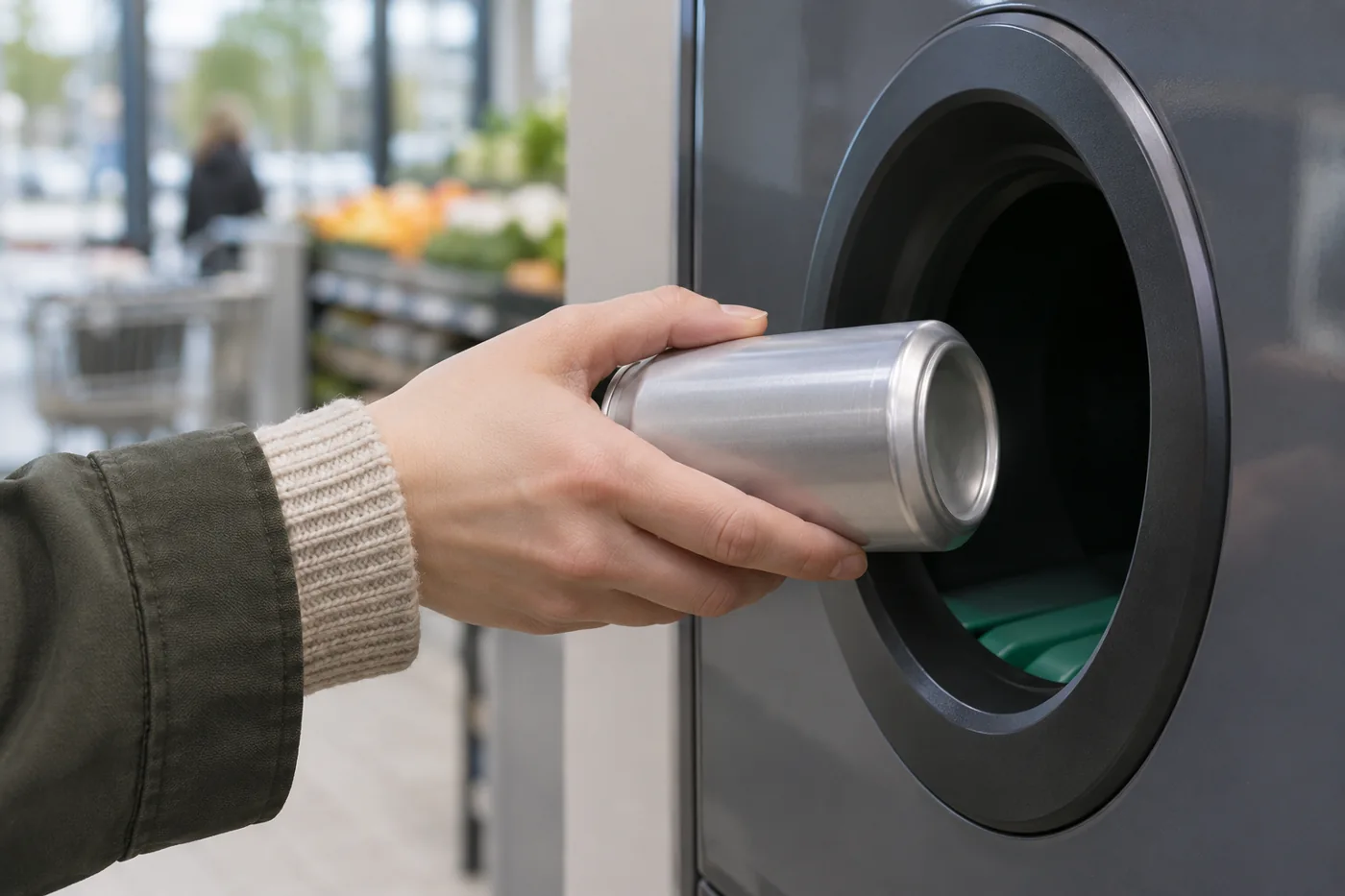
At a single-container opening, follow the diagram and offer one item at a time. Let the machine take it. Look at the display after the first can, particularly if this is your first return. Once you see the credit, you know where to look as you feed in the rest. If an item comes back out, set it to one side and finish the ones the machine recognises. That way a single damaged label does not hold up everyone behind you.
When the last item has registered, choose the option that issues your return slip. Read the screen before pressing, particularly if it offers a donation option as well. Take the printed slip before stepping away. A quick look at the total here is more useful than noticing a discrepancy at home. If the paper does not emerge or the display freezes, ask a member of staff while you can still point out the machine you used.
An empty bottle and a printed slip have different journeys. The eligible bottle could have come from another supermarket. Once you have fed it into a machine, the simplest place to redeem the slip is the checkout serving that return point. Finnish alcohol retailer Alko explains its return-slip policy for its own shops. If the machine is in a shared entrance, check the name on the slip or ask where to take it before you walk away.
If you are buying food, hand over the slip before you pay. With a 60-cent slip and a €4.20 basket, the amount left to pay is €3.60. If you are heading straight home, take the slip to a staffed checkout and ask for the deposit back. Palpa’s consumer FAQ confirms that redeeming the deposit does not require a purchase. There is no need to invent an errand or buy a packet of gum to use up the credit.
If someone else is doing the shopping, make sure the person at the till has the slip. It is surprisingly easy for one person to handle the empties, put the paper in a coat pocket and wait outside while the other pays. The money sits on the slip until it is redeemed. Keeping it with the shopping list, then handing both over together, solves a very ordinary household problem.
Start with the rejected item itself. Is there still liquid in it? Has the label twisted, peeled away or torn through the barcode? Was the can crushed in transit? Check the deposit mark against another container the machine accepted. Two soft drinks with the same flavour and branding can have different barcodes if they were sold for different markets. The appearance of the drink can be a poor guide to the status of the packaging.
A bottle bought abroad is a common source of surprise. Paying a deposit in another country does not establish that a Finnish machine owes you that amount. Check the specific container against the Finnish system. If it has no Finnish deposit, use the appropriate recycling collection for its material. For example, an empty drinks can without a deposit can go to metal collection. An ordinary glass packaging collection point is a separate destination from the supermarket’s deposit machine.
If you are confident the intact bottle qualifies, keep it and show it to staff. Describe what happened in one sentence and show the barcode or receipt if you have it. When the machine itself is out of order, the shop still has a responsibility to handle eligible returns in the systems it serves. Ask how staff are taking them that day. Leaving a bag beside the closed machine gives you neither a count nor a way to claim its value.
Pantti means deposit. Pantillinen describes something that carries one, while pantiton describes something without one. Those two endings matter more than the brand name when you are reading a label. Tölkki is a can and pullo is a bottle. You may recognise the beginning of pullonpalautus once you know what a bottle is called. Palpa also publishes its consumer questions in Finnish, which is useful if you want to match the language on the packaging.
At the till, “Voinko lunastaa tämän kuitin täällä?” means “Can I redeem this receipt here?” If a machine returns a bottle, try “Onko tässä pullossa pantti?”, or “Does this bottle have a deposit?” You can simply show the item as you ask. These are separate questions. The first tells the cashier you already have a slip, and the second gives them a chance to look at the label before deciding what to do.
Choose somewhere upright for the next few empties. A washable tote by the recycling bin works if the bottles have been emptied properly. Leave loose cans on top of the heavier glass, keep the labels dry and take the tote on your next grocery trip. The useful habit is pairing the return with a journey you already make. If your entrance is cramped, make that trip sooner instead of compressing the contents of the bag to fit more in.
In a shared flat, decide where the slip goes before anyone leaves for the shop. If the empties belong to everyone, one practical choice is to put the credit towards shared groceries. If each flatmate wants their own refund, finish one batch and take its slip before starting the next. The machine can total the containers you feed it, but it cannot remember whose shelf they came from. Two small batches are easier than dividing a single receipt after the event.
For a visitor, the final morning is the one to plan around. If you leave your accommodation before the shops open, an intact bottle and a perfectly legible mark still leave you with a practical problem. Return the empties on your last grocery trip while there is time to take the slip to the till. For more guides to the small routines that change when you move or travel, browse Bravlo’s Living Europe section.
Before leaving home, check three things. Are the containers empty? Are they still recognisable, with labels and barcodes intact? Do you know which ones carry a deposit, or have you set aside the one you want to ask about? At the shop there is just one more thing to remember. Take the slip to the checkout while you are still there. The first trip takes a little attention. On the second, it can be as ordinary as taking your shopping bag and keys.
Ahmad Hassan writes about everyday life in Europe for Bravlo. In this guide he explains how Finnish deposit markings, barcode scans and supermarket receipts fit together.