
How to Order a Baguette in France and Get the Crust You Like
- November 9, 2026
- 1
At a French bakery, two loaves on the same shelf can look almost identical. Ask for une baguette and the person serving you may reach straight for one,

At a French bakery, two loaves on the same shelf can look almost identical. Ask for une baguette and the person serving you may reach straight for one,
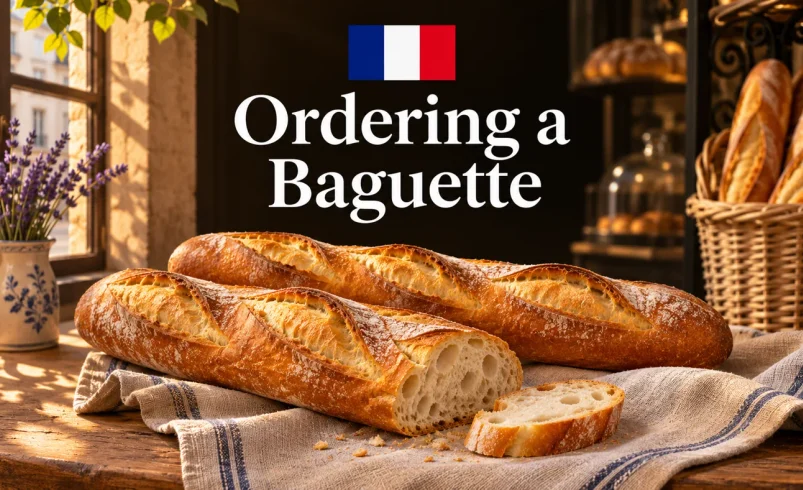
At a French bakery, two loaves on the same shelf can look almost identical. Ask for une baguette and the person serving you may reach straight for one, or ask “Classique ou tradition?” You have heard a question about the type of bread. If they then hold up two loaves of different colours, you have another choice to make: how brown you like the crust.
The easiest way to order a baguette in France is to greet the person at the counter, name the loaf and add a preference if you have one. “Bonjour, une tradition bien cuite, s’il vous plaît” asks for a traditional French baguette with a well-browned crust. For a lighter bake, replace bien cuite with pas trop cuite. Leave both phrases out if you are happy for the baker to choose. These few words work whether you are buying bread for a wedge of cheese on a park bench or bringing it to someone’s table for dinner.
First look for the names. One label might say baguette classique, another baguette de tradition française, and a third might carry a house name that means little outside this particular shop. Read the small description under the name if there is one. A sign saying aux graines tells you to expect seeds. A village name or family surname gives you much less to go on.
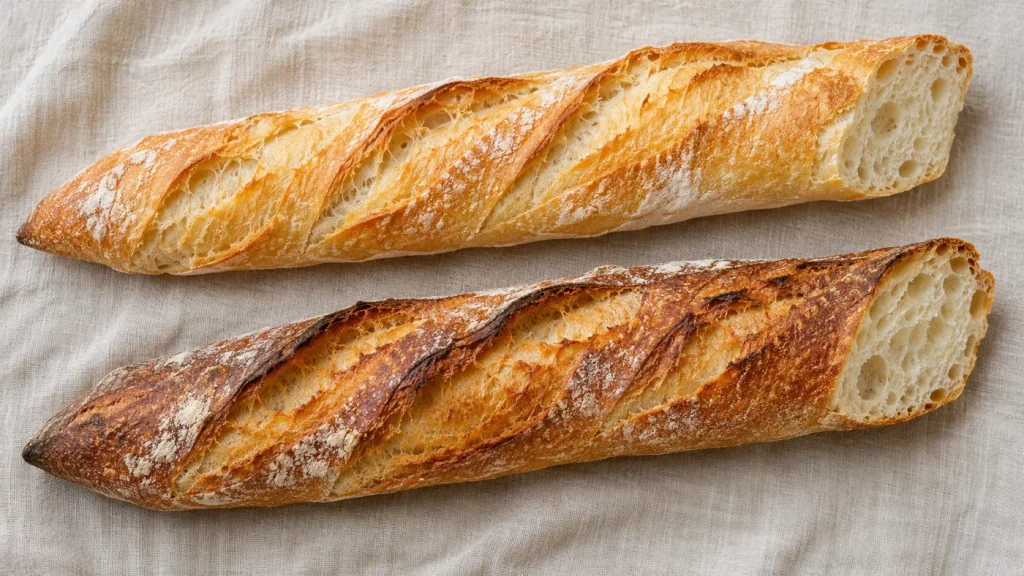
Then look at individual loaves under the label you want. One may have a thin golden edge along its cuts while its neighbour has a deep chestnut ridge. Those differences can exist within the same batch and under the same price label. If a particular loaf appeals to you, point it out while the person serving you is looking at the rack. That is usually easier than trying to describe the exact shade of brown in another language.
Suppose the basket on the left holds pale classiques and the one on the right holds darker traditions. You can ask if there is a more deeply baked classique or a lighter tradition. The arrangement you see describes what is on the counter at that moment. On another visit the choice may look different, even in the same shop.
Tradition is worth remembering because it tells you something concrete about how the bread was made. In France, the designation pain de tradition française is reserved for bread made under specific conditions. The rule covers the dough and its preparation, including a prohibition on additives and deep-freezing during production. It applies to more than one shape of loaf.
The base is wheat flour, water and salt, with baker’s yeast, a starter, or both for fermentation. The text also permits small amounts of certain other flours. That detail matters if you have heard that a tradition must be made with sourdough alone or that a simple four-word ingredient list settles every question about the bread. You can read the exact conditions in Article 2 of France’s bread decree.
What does that mean for lunch? Ordering a tradition gets you a particular kind of bread. It leaves plenty of room for differences in flavour, crust and crumb from one baker to the next. If you specifically want the taste of sourdough, ask “Vous avez un pain au levain?” If you want the tradition you bought yesterday but with less crunch, keep the bread name and change your request for the bake.
A classique is a perfectly sensible choice when you like the look of it or know it suits a sandwich you have in mind. Its label alone gives you no reason to assume the loaf was frozen, contains a particular additive or was made carelessly. It also tells you little about how firm the crust feels when you bite through it. A well-browned classique might be closer to your ideal baguette than the palest tradition on the shelf.
When two loaves are sold under unfamiliar house names, try “Laquelle est une tradition?” for “Which one is a tradition?” If the answer is neither, you still have useful ways to choose. Ask which has the softer interior, or say you want bread to eat with soup. A question about how you plan to use it is easier to answer than a request for the single best bread in the shop.
Bien cuite means well baked. For a baguette, it is a useful way to ask for more colour and a pronounced crust. Pas trop cuite expresses a preference for a lighter bake. It is a request to select from the bread available, so the effect depends on the batch. One shop’s palest loaf might be darker than another shop’s middle option.
Use the bread itself to settle the question. If the baker holds up a loaf and it looks right, a simple “Oui, celle-là, merci” means “Yes, that one, thank you.” If you want the one beside it, try “Un peu plus dorée, si vous avez” for “A little more golden, if you have one.” It is fine to stop there. An exchange that ends with a gesture and a smile has accomplished exactly what you came for.
On the first mouthful, notice the difference between the outer shell and the inside. In French, la croûte is the crust and la mie is the crumb. You might enjoy the toasted flavour of the ridge but prefer a softer centre, or love the creamy middle and find the ends a little too hard. Those observations are more useful on your next visit than trying to remember whether the bread looked suitably rustic. For a French description of the sensory details, Paris’s tourism office explains what bakers look for in a baguette.
Start with one short sentence. “Bonjour, une baguette, s’il vous plaît.” If you know which bread you want, swap in its name. You can add the bake preference at the end or wait until you see which loaf is offered. You do not have to describe the crumb, the colour and the meal all at once.
| What you want | What to say at the counter |
|---|---|
| One tradition, baker’s choice of bake | Une tradition, s’il vous plaît. |
| A classique with a lighter crust | Une classique pas trop cuite, s’il vous plaît. |
| The darker of two loaves | La plus cuite des deux, s’il vous plaît. |
| Half a baguette, if available | Est-ce que je peux prendre une demi-baguette ? |
| Two loaves with different bakes | Deux traditions, une bien cuite et une pas trop cuite, s’il vous plaît. |
If you lose track of the reply, listen for the last few words and watch the baker’s hand. “Comme ça?” means “Like this?” and usually invites you to confirm the loaf you can see. “Et avec ceci?” or “Avec ça?” asks whether you would like anything else. “Ce sera tout, merci” closes the order politely. It is especially handy when you have your bread and are still mentally translating the previous question.
A whole baguette can be awkward when you are travelling alone and have neither a kitchen nor a sensible place to keep leftovers. Ask for a demi-baguette before the loaf goes in the bag. Availability and price are for the shop to confirm. If the shop sells only whole loaves of your chosen type, look for a small bread roll, un petit pain, or ask whether another baguette can be sold by the half.
Think about how you will carry it, too. If you want the entire baguette, but would like it in two pieces so it fits in your bag, ask for “une baguette entière, coupée en deux.” That order buys the whole loaf. “Une demi-baguette” asks to buy half. The difference is a few words, but it matters when someone has already reached for the bread knife.
For a sandwich, start with the filling. A crust you enjoy tearing at the dinner table might squeeze a soft egg filling out of a narrow roll. For that lunch, ask for a lighter loaf and look for a width that lets the two halves close around the filling. If you plan to spread butter edge to edge, a relatively even crumb is convenient. Large holes make attractive slices and can also deposit your butter on the cutting board.
For a bowl of soup, a darker crust gives you toasted edges to tear off and dip. Try a piece plain before dipping it. You may discover that what you liked was the browned edge and that next time a smaller, well-baked loaf will suit you better than a large loaf with more soft centre. For cheese, taste a piece of the bread alongside the cheese before adding anything else. A very assertive crust and a delicate cheese can compete for attention.
For a shared table, ask how the bread will be served. A host making little open sandwiches might prefer a wider loaf that cuts into regular slices. If everyone will tear pieces to eat with dinner, a long baguette divided into a few sections can be passed around easily. When one person likes a softer bite and another wants crunch, two differently browned loaves of the same kind make a more useful comparison than buying two unfamiliar breads and guessing what caused the difference.
Keep the name on the paper bag or take a quick note once you are outside. Write down just three things: the name on the shelf, the bake you asked for and what you ate with it. “Tradition, darker, good with lentils” is enough. The next time you see a rack of similar loaves, you can order from memory without having to recognise yesterday’s bread by its shape.
Change one thing on the second visit. If you enjoyed the flavour but found the crust too firm for breakfast, keep the tradition and ask for a lighter one. If the crust was just right but you want to explore another dough, ask for a classique of similar colour. Trying a different bakery, loaf type and bake all at once may produce a delicious lunch, but it makes it harder to work out which detail you would like to repeat.
If you have only one morning in town, use the same idea on a smaller scale. Buy bread for the meal you will actually eat, then try a plain piece before adding butter, jam or cheese. Even the end and the middle of the same loaf offer different proportions of crust and crumb. For more food reading between stops, browse Bravlo’s Tastes of Europe.
Yes, when the shop sells a baguette under that name. Add bonjour and s’il vous plaît for a complete, polite order. If several breads carry the word tradition, point to the label you mean or specify une baguette de tradition.
Colour, flour dust and the cuts along the top can help you pick a loaf you like the look of. They cannot establish its ingredients or production history. At the counter, the product name and the baker’s answer give you better evidence than a photograph.
It describes the extent of the bake. To ask which bread has most recently come out, try “Laquelle vient de sortir du four?” A loaf can be deeply browned and already cool, or recently baked and fairly pale.
Ask “Vous en refaites aujourd’hui?” to find out whether another batch is planned that day. If returning would disrupt your plans, describe the feature you wanted, such as a crisp crust, and ask which available loaf comes closest. You may leave with a different shape that works just as well with dinner.
Ahmad Hassan is the founder and editor-in-chief of Bravlo.eu. He works with the editorial team on guides to everyday choices across Europe. For this guide, that meant separating the French rules behind a bread name from the personal preferences that matter at the counter, then pairing each choice with a short phrase an English-speaking visitor can actually use.




1 Comment
[…] every ingredient. For another example of how local food names affect an order, Bravlo’s guide to ordering a baguette in France explains what to ask at the counter when different loaves look […]
Comments are closed.