


Bucharest to Brașov by Train in Romania
- November 10, 2026
- 1
The train you want may have a city other than Brașov on the front. Brașov can be an intermediate stop. What you are looking for is the service

The train you want may have a city other than Brașov on the front. Brașov can be an intermediate stop. What you are looking for is the service
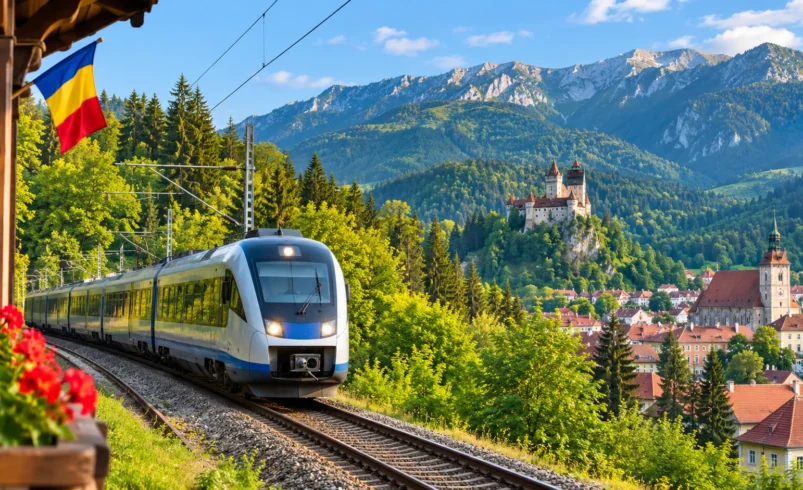
The train you want may have a city other than Brașov on the front. Brașov can be an intermediate stop. What you are looking for is the service number on your ticket, leaving București Nord on the right date and stopping at Brașov. Get those three details straight and the departure board becomes much easier to read.
For a first trip, start with a direct service from București Nord, the station Bucharest residents call Gara de Nord. Compare departures for your travel date in the Infofer timetable, then book with the operator running your chosen train. At the other end, allow time to get from Brașov railway station to the historic centre. The journey shown in the railway timetable ends at the station.
In the departure field, enter București Nord and select the matching station from the suggestions. In the arrival field, select Brașov. If you searched using the English spelling Bucharest, check the suggested station before continuing. Save the Romanian names on your phone. They are useful when a booking screen, a station announcement and your hotel confirmation each use a slightly different spelling.
Gara de Nord is a workable meeting point only if your group agrees where to meet inside it. A station name in a group chat leaves room for one person to wait outside and another to wait beside the departures board. Agree on a meeting place and who has the tickets before splitting up for coffee or supplies.
Use the Infofer journey planner and enter the date you intend to travel. Open the advanced fields and choose direct trains for a simple first comparison. Open the details for two departures that fit your day. Write down the operator, train number, departure time, arrival time and whether a change is required. These five details are more useful at the station than a cropped picture showing only the price.
Imagine choosing between an early train you can barely reach and a later train that gives you time to find your coach. Compare the time you would actually leave your accommodation with the time you would reach your destination in Brașov. The quicker train on the railway website can still be the less convenient choice for your day.
Check the sequence of stops if you want to combine the journey with a visit to a mountain town. A train passing through the area does not guarantee a scheduled stop at the place you want. A stop on the timetable also does not give you the right to leave the train for lunch and continue later on the same ticket. For a planned stopover, price the two legs separately and check the conditions for each.
Infofer helps answer which trains run. The next question is who sells your chosen departure. If the operator is CFR Călători, open its official ticket service and repeat the search. Match the date, stations and train number before choosing a fare. For another operator, use that company’s official sales channel and its own ticket conditions. Keep the operator name with your confirmation in case you later need help.
On the payment screen, check the passenger count, class and any conditions attached to a discount. A price quoted for one adult is a poor reference for a family if it omits a passenger or assumes eligibility for a reduced fare. If the return trip matters, search it separately before buying the outward leg. Knowing that there is a suitable return can change which outward train makes sense.
Take a moment to distinguish three different things you might save on your phone. A search result helps you compare trains. A payment notification records a transaction. The travel document issued by the operator is what you need to present in the form the operator accepts. Open it before leaving your accommodation and read the passenger and identification instructions.
If you arrive by air, the airport arrival time and the departure from București Nord belong to different journeys. Start your rail search at the station printed on the onward ticket. Work backwards from that departure to allow for leaving the aircraft, collecting bags, reaching the station and finding the correct platform.
A traveller staying overnight in Bucharest can choose a morning train quite differently from someone landing that morning. For the overnight stay, the main uncertainty may be the trip from the hotel. For the flight arrival, compare the cost and conditions of changing the rail ticket with the inconvenience of waiting for a later train. There is no single connection margin that suits both journeys.
Look for Plecări, meaning departures. Sosiri means arrivals. Start with the scheduled time and the train number, then read the displayed destination and track information. If the destination is farther along the line, use the stop list to confirm Brașov. Recheck the live board before walking out to the train, especially if the track was missing the first time you looked.

A useful question is “De la ce linie pleacă trenul spre Brașov?” It asks which track the train to Brașov leaves from. Show the train number as you ask. That small detail helps staff distinguish your departure from another train heading in the same direction. If the advice differs from an old screenshot, check the current board with staff while you are still in the concourse.
Read the coach and seat separately if the ticket assigns them. Vagon means coach and loc means seat. Finding your seat number in the wrong coach can look convincing until another passenger arrives with the same seat number. If a coach label is hard to find, show the ticket to railway staff before working your way along a busy carriage with luggage.
If the stops on your train include Sinaia, look at its position in the sequence rather than treating a photograph of the station as a boarding or alighting instruction. Different services make different stops. For a window view, the useful question is whether your chosen train travels through the valley in daylight. The booking screen may tell you more about the seat you can reserve than a generic promise about the best side of the train.

Keep the ticket available after boarding. Before packing your phone away, save the address of your accommodation, the Romanian spelling of Brașov and the next step after arrival. Doing this while seated is easier than searching a crowded station entrance while someone else is waiting for your plan.
Brașov station and the old town are separate destinations. Use the station as the starting point for a local journey and your accommodation address as the endpoint. If you are heading towards Livada Poștei, consult RATBV’s route 4 timetable and confirm the direction from Gara Brașov. Outbound and return pages can look similar. Check the stop names in sequence before relying on a departure time.

If your accommodation is described as “near Brașov”, open its exact map pin. An address close to the station might make a bus towards the old town an unnecessary detour. An address on a pedestrian street may require a short walk even if you take a taxi. Tell anyone meeting you whether your message “arrived” means at the railway station or at your accommodation.
If the original departure disappears from a search, check the date and search filters first. A search restricted to one operator or one time window can hide a perfectly valid alternative. If a particular train remains unavailable for purchase, seek confirmation from the operator before making a second payment. A timetable listing alone cannot confirm a seat or a completed booking.
If you miss a booked train, read the conditions of that ticket or ask the operator what you can do before boarding another service. The fact that another train serves the same stations does not establish that it accepts the earlier ticket. If you change the booking, open the new travel document and check the train number again.
Can you find the train number without opening your banking app? Can a travelling companion identify the departure station and the operator? Can you explain how you will get from Brașov station to the place where you are staying? If one of those answers is missing, that is the detail worth settling before you leave Bucharest.
For another journey, start again with the current travel date. Keep the station names and the method you used to compare services. Look up new departure times, prices and booking conditions for the new trip.
If you are travelling with someone else, make the outward booking with both passengers in view before paying. Check whether the offer actually confirms places together. Two seats in the same class do not necessarily mean two seats next to each other. Read the final allocation and save a copy where each traveller can find it if you get separated at the station.
One person might be carrying both tickets on a phone while the other goes ahead to find the coach. Agree where to meet if the platform changes. If your ticket names the passenger, make sure the person holding the booking can produce the appropriate documents when needed. Use the railway’s own guidance for children’s fares or concessionary tickets rather than assuming that a discount from your home country applies.
For a day trip, plan backwards from your return departure. Start with the time you want to be at Brașov station and then decide when to leave the old town. The return timetable starts at the station, while your afternoon might end at a café a bus ride away. Leave time to pay, walk to the correct stop and take an alternative if you miss a local departure.
A one-night stay changes the calculation. If your accommodation can store luggage, an early arrival might give you more time on foot even before check-in. If it cannot, a later arrival may fit better. Ask the accommodation about luggage directly. A train ticket tells you when you can arrive in the city, not when someone can let you into the room.
First check whether you accepted a station from the suggestions or simply typed its name. Then widen the departure time window. Finally, compare the operator’s shop with the multi-operator timetable. Each check tests a different cause. Repeating the same search on three reseller sites is less informative than changing one filter at a time.
If your planned travel date is still some way off, absence from a sales screen is not conclusive evidence that trains will not run. Look at a nearer date to understand how the search works, then return to your actual date before making a decision. Never book the sample date by accident. On the final checkout screen read the month as well as the day, particularly around a midnight arrival or a weekend away.
Does the last city on the departure board have to be Brașov? No. A through train may continue beyond your stop. Confirm Brașov in the calling pattern and match the train number and departure time to your ticket. This matters most when two departures leave close together and both seem to head in the right direction.
Can I use a screenshot instead of the ticket? Save the document the operator issues and follow its presentation instructions. A screenshot of a payment receipt or search result is different from the ticket. If you plan to rely on a phone, open the document away from Wi-Fi before leaving so you know exactly what is available offline.
Should I buy the cheapest departure? Compare the whole arrangement first. A reasonable fare on a direct train that fits your hotel checkout and onward connection can be a better choice than a slightly cheaper departure that leaves you paying for extra transport at either end. The right comparison is between two journeys you can actually make.
More European travel guides from Bravlo
Ahmad Hassan writes practical travel guides for Bravlo, with an emphasis on the details readers need between booking a journey and arriving at their destination.





1 Comment
[…] another European rail trip? Bravlo’s Bucharest to Brașov train guide walks through choosing the right stations and service in Romania. In Hallstatt, the most useful […]
Comments are closed.